Thursday, 26 May 2016

NOT a typical day in the metro! by Sreemoyee Bhattacharya


 ‘Why loiter’ is turning two this Sunday. For those who don’t know what ‘Why loiter’ is, let me give you a brief description. It is a movement for women (not necessarily only by women) to gain back the rights to reclaim public space. Neha Singh, a short filmmaker, author and actor started this movement based on the book ‘Why Loiter’ written by Shilpa Phadke. As part of ‘Why Loiter’, a group of people (mostly women) usually loiters around the city during night. But last Sunday was special! It was basically a demo version of the second birthday celebration of ‘Why Loiter’ on next Sunday.

So eight of us met at Versova Metro station at 5 PM on 22nd of May. Four girls and four boys. Few of us knew each other already. The others too mingled well in just a couple of minutes, like how revolutionaries connect very quickly! We all bought return tickets for Versova-Ghatkopar. The idea was to entertain the metro passengers by reading, singing and reciting or playing games and let them reconsider whether they want to have a journey with real friendly people around or in the virtual world created by their Smartphones. We discussed a little about our plans before boarding the train, but lets not give out spoilers here.


Once we entered the train, we discovered a rope tied between two metro seats (facing each other) designated for women. One of us almost tripped over it, not knowing what exactly it does. A middle-aged woman smiled at us, saying it is ‘The Lakshman Rekha’. We were excited to see the smile on our first fellow passenger’s face, which is rare nowadays. We realized that the rope actually divides the general and ladies compartments. Well, it is ‘Lakshman Rekha’ then!


Satchit, an FTII passout, got pretty excited now. He asked the woman if she has read Ramayana by Valmiki, as the concept of Lakshman Rekha was not even there in that version. He informed that it was later added in Tulsidas’ Ramcharitamanas. The woman smiled again explaining that she had only seen Ramayana in television or movies. Satchit took out a book from his bag now and started reading a short story that had five letters written by Sita to her parents. By then the train was half full and it began its journey towards Ghatkopar. The passengers were not quite sure what exactly was going on there. But they looked curious. Many of them listened to the story carefully and there was a round of applause once it was over.


But we realized that not everyone could relate to the story. So Ajitesh Gupta, an UP-born actor and singer, started singing a Marathi song. People, who were busy with cellphones, turned now. Ajitesh, with his amazing voice, pulled more crowds towards our small group. There was a bigger round of applause once he finished the song. Then we sang Tagore, ‘Aakash Bhora Shurjo Tara’. Glimpses of ‘Komal Gandhar’ played hide and seek within me. Next was a Gujrati song by Satchit. It was a hilarious song about ‘Garam Chaye’. By then the entire crowd got interested in us. Some started asking if Sonu Nigam had disguised himself again. We laughed. Everyone laughed.


So it was time. The interaction began. And in a country like India, especially in a city like Mumbai, what can be more interactive than music? Decision was taken immediately. Antakshari it was. And the proud ‘Lakshman Rekha’ divided us in two teams. Girls vs Boys.

‘Baithe baithe kya karenge, karna hai kuchh kaam,
Toh shuru karo antakshari lekar Prabhu ka naam’

I always wondered who this ‘Prabhu’ is. But whoever he is, he created a brilliant game indeed! The girls’ team had to sing a song with ‘Ma’. Someone from the far end of our compartment started singing ‘Mere khwabon me jo aaye’. And most of the girls joined her with sheer joy. Then the guys’ team had to sing with ‘ey’. And it went on.


Interestingly, the girls were much more spontaneous than the boys. So none of us, the four girls from our group, me, Neha, Devina and Rashmi, had to start a single song with the letters given to us. All other girls did it. Rather we were just one large group of girls playing the game against the boys! There were few men though, who participated and sang songs of Big B, with a lot of excitement in their voices. We danced along with them. It was so much fun!
Stations came and went, the game continued. One of the girls came in front and declared that she had to get off at the next stop, but she would want to join us in this venture. Neha shared numbers with her. We heard another girl, who was about to get down, telling her friend how she wished to continue the journey with us.

And like that, to our astonishment, we almost reached the last station, not even realizing the time it took. It was time for the last song. And the girls’ team had to sing with ‘Ha’.  Someone started ‘Hum honge kamyaab’. It was co-incidental though. But the entire compartment sang along. The girls from all age groups had sparkle in their eyes while uttering every single word of the song. For a moment we felt, there is no discrimination in this world between different religions, castes, races or class! The spirit of equality resonated all over the public transport! Who says the world has lost all hope?


Once we reached Ghatkopar, lot of people came and thanked us for making their journey so entertaining. But it should have been other way around. So we thanked them more. Some of them said that they would do something like this on their own, if they have a group. Others showed lot of enthusiasm to join us.

The return journey also went like that. We sang and danced along with our wonderful fellow passengers. When we reached Versova, we saw a burqa-clad woman dancing happily on her own, inside the empty train. Her happiness was our tribute to ‘Why Loiter’ movement indeed.


We came home with hearts full of hope and promises! This was just a demo. So this Sunday, 29th of May, at 5PM we will again embark on a similar journey. And we believe that some of them and many of you, who are reading this right now, will join us! Let’s make the world more beautiful and peaceful together!

P.S. Co-incidentally, the only book I have published till date, a collection of Bengali poems, was named as ‘Life in a Metro’. I had a series of poems on the journeys I had in a Metro rail in Kolkata. Well.. the writing bug bites me again!

Sreemoyee Bhattacharya is a filmmaker, writer, singer, champion of Bengali literature and an engineer. She is originally from Kolkata, but she is loving loitering in Bombay too.


Monday, 14 March 2016

'Loitering' the play! - Neha Singh


I am sure when the authors of the book 'Why loiter?' were writing it they hadnt thought the ideas they were penning were going to turn into a movement. And when I started the movement 'Why loiter?' in Mumbai I had no idea people in other cities would make their own loitering groups. And I definitely did not think that after almost two years of loitering, someone would propose to make a play about it. A play purely celebrating the joy of loitering, by people of all shapes, ages and sizes.


Satchit Puranik, a theatre colleague and co loiterer proposed the idea of making a play around the themes mentioned in the 'Why loiter?' book, the experiences of the women that are part of the 'Why loiter?' movement, and his own personal learning journey associated with years of travel in and outside the country. Satchit also participated in the Why loiter? walks whenever he was allowed. When we invited men to come dressed in women's clothes and walk with us, Satchit dressed up in a shimmery long skirt and a low cut blouse and came.


But I had no idea what was in store when Satchit began working on the play. The first day when I went to see the rehearsals, I was refreshed to see lots of people that are essentially non actors. This eclectic cast included a ,Gujarati world class tabla player, Maharashtrian couple in their mid sixties, a Malayali single mom of two young daughters, a young storyteller who is also a mother of two, an eighteen year old kathak dancer, a 30 year old Muslim rapid sketch artist from Aligarh, a young office going girl from Nagaland, and a kallari payattu martial artist from Uttar Pradesh and two young Mumbai girls, one a gujarati and the other a Sindhi, to help with the direction and the production. two young men helping us with music, sound and art, again from diverse backgrounds. I was awestruck with this wonderful and experimental cast, and I knew instantly that this was going to be a fun roller coaster ride.


This was going to be a DOCUMENTARY THEATRE piece, where people come on stage as themselves and share their own personal stories, of course, with artistic and dramatic embellishments, but essentially its non-acting.
The stories that emerged were priceless. The rehearsal space turned into a safe space to share our most intimate stories of being in public spaces, over the years. We shared experiences of being on roads, in buses, in trains, in different cities of India, during the day and the night, with people or without, as men and women, as young adults and children and grown ups.
Patterns emerged, of societal norms of being 'safe', 'protected', being feminine and masculine, what it means to be a woman in our country and what it means to be a man. Both equally stifling.
Our own mini rebellions and transgressions of rules and feeling of being heroic when all you had done was cross the road to drink chai at a chai stall on the pavement.


We discovered what is called the 'Ganika Gat' or the walk of the courtesan, at one point an integral part of Kathak but not a single teacher teaches this to his/her students anymore. There is no mention of the Ganika Gat online and no research material. Satchit tracked down one of the few remaining Kathak dancers who knows the form and had long discussions with her about the seduction attached to the walk of the courtesan and how a woman's walk in a public space can never be removed from what it means to the male observer.
We shared what it means to be a woman cycling down a Mumbai road, with men leering, honking, pointing and behaving in extremely juvenile ways.
There were a few disturbing stories too. Like a girl getting harrassed in the most disgusting way on Holi, which is a major Hindu festival, especially celebrated with enthusiasm in the North of India. Stories of women being burnt for stepping outdoors and women taking inspiration from buffaloes, that loiter uninhibitedly on the roads, of what it means to finally have two free hands because you are no longer mobilizing your dysfunctional knee with your hand, the pressures on a boy to turn into a 'man' by his own male family members, the sign board outside an 'Art of living' center that banned menstruating from entering the prayer hall because when you pray your energy is 'going up' and when you are menstruating your energy is 'going down' etc etc.
It was a difficult task to weave all these stories together in a play and Satchit made good use of poem, one of them by our lovely young supporter from Pakistan, Hira Yousuf's 'You are not allowed' and others by well known poets like Vinod Kumar Shukl and Paash.


The cast wore their own personal clothes, clothes they liked best or those colours that represented the nature of their stories and personalities. In fact, the stories all fell under the nine moods, or the navrasas that is spoken of in the Natyashastra. Stories of courage, of romance, of horror, of happiness, of motherhood, anger, sadness, peace etc.
The rapid sketch artist, Satchit decided would keep making sketches of people in the audience or people on stage as and when he felt like, onstage, of course. Satchit himself decided to dress in women's clothes for the show. We were taking several unique risks, like making panipuri on stage, offering and drinking chai on stage and all inviting the audience on stage to loiter with us.
Finally the show day arrived. 8th March, Women's Day. We were lucky to have two great producers, Amrita Dodani and NCPA Edge.
Hearts were aflutter, considering the form 'documentary theatre', and all the other risks involved. But as soon as the play started, all the nervousness disappeared. The audience was with us from the word go and connected with all the real stories of women and men loitering in cities and towns of India. The authors of the book 'Why Loiter?' had come to watch as well. At the end when the audience was invited to come on stage and loiter with us, almost everyone came on stage, tasting the panipuri and the chai (the official food and beverage of loitering) and mingling freely with the artists and other audience members.


That is when we realized that we had successfully made the point we had in mind. Here we were, the lines between audience and artists blurred, everyone connecting with one another on the experiences we have all had loitering or at least trying to loiter, and the joy it brings to each one of us. We surely planted the seeds of unapologetic, aimless, joyous loitering firmly into the minds of the audience.


Thursday, 18 February 2016

Sharing ideas of loitering with tribal girls at the SELF workshop by CREA- Neha Singh


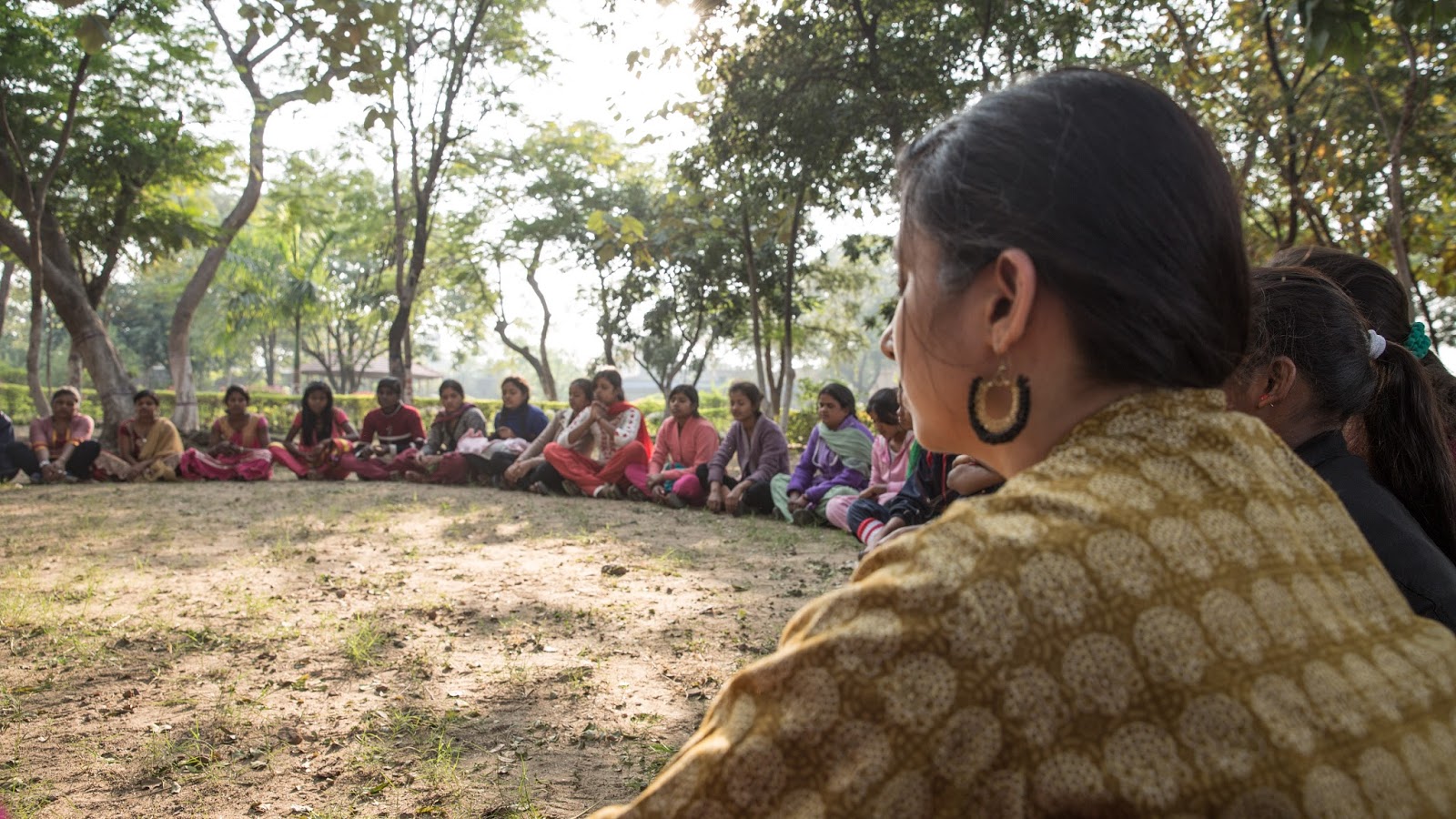
The year started with meeting some amazing young women from Jharkhand at the SELF (Sports, Empowerment, Leadership and Freedom for young girls) workshop organised by CREA. CREA has been working with the community based organisations in Jharkhand for the past three years to advance sexual and reproductive health rights of adolescent and young women through sports. This particular workshop was a 15 day residential workshop for 50 tribal girls selected from across the state. This residential workshop will happen everywhere henceforth, providing a world of new exposures, learning and experiences to girls.
The fifty fiery and fun loving girls came from different villages and cities across Jharkhand to attend this workshop at the tribal cultural centre in Jamshedpur. Some of them took overnight buses, some of them came in trains, some in shared jeeps and mini buses to attend the workshop, forgoing their Christmas and New Year celebrations with the families back home. Like one of the girls said to me, "I celebrate with mummy and papa every year, but I wouldn't get an opportunity to come here and be with all the other girls and the teachers and learn so much, so I don't mind skipping Christmas and New Year outings with the family."


The girls came from different parts of the state, but the ideas of the workshop, their mentors and teachers, the love for football and sports and learning new things together really brought out the team spirit in them.
My two day workshop with them centered around the ideas of the Why loiter? book and the movement. The medium I chose to share these ideas with them was theatre. The girls had never attended a theatre or drama based workshop before so they were excited and full of energy. We started with some basic theatre games and exercises and then moved to creating short improvisations based on their experiences and memories of public spaces, what it means to be a girl in their city/village, what the familial and societal norms of clothing, access to public spaces and mingling with people of other genders.


At first most of them said that they get a lot of freedom and can do whatever they like, barring a few who said that they feel restricted in terms of their clothing and freedom.
But when I probed a little more, I realized that the conditioning had been so deep and strong that the girls had internalised it and felt whatever they were offered was good enough. For example, most of them said they could wear whatever they liked, but it actually meant they could wear any design/colour/style of salwaar kameez only. When they shared further, they revealed that they were not allowed to wear jeans or t shirts or dresses at all.
Same case with accessing public spaces, most of them said that they could go anywhere they felt like, but soon it was revealed that this freedom was only till 4 or 5 in the evening and was restricted to going to school, to the tuition class or a friend's house in the neighbourhood. After 4 in the evening they were not allowed to step out at all, unless they were escorted by a brother, or if the entire family was going out.


When it came to communicating or being friendly with boys, the experiences were very similar. There was a lot of shaming and teasing if the girls spoke with boys, even with their classmates or friends' brothers. Rumours and 'link ups' would immediately be created if the neighbours or people from the extended families saw the girls with boys. This led to the girls and boys leading completely segregated lives and meeting only secretly.
During the improvisations and creating short dramatic pieces based on their experiences some very interesting stories came forth.
One girl narrated her story of wanting to buy jeans. She forced her mother to buy her a pair of jeans, inspite of her mother repeatedly saying no to her. Finally, when she wore the pair of jeans and went out, her aunt who lived close by teased and ridiculed her for wearing jeans, something that only girls that are 'immoral' wear. This hurt her so much that she came home, took off the pair of jeans and wore salwar kameez. When her mother found out she scolded her for making her buy such expensive jeans and then not wearing them. This double jeopardy caused so much stress to the girl that she took a pair of scissors and cut up her brand new pair of jeans into ribbons.


Another story was shared by a girl who lives in Hazaribagh. She said that once she was sitting in her classroom and a couple of her brother's friends came to the window and began talking to her. During this her pencil fell out of the window and one of the boys picked it up and gave it back to her. This simple act caused such a furor in the community that when she reached home she was thrashed by her mother and locked up at home for a few days.
Some of the participants were married. It was even tougher for them to access public spaces and have platonic relationships with the opposite sex. Most of them said that it was only because of the support of their immediate families and the constant convincing by CREA teachers that they were able to come for the workshop.


That evening when I spoke to them about 'Why loiter?' the book and the ideas it talks about, they heard me in pin drop silence and when I told them about the movement that is inspired by the book they were thrilled. I narrated to them our several run ins with the police, with harrassers on the roads, with stalkers and people in general that find it odd for us to roam around at night or sleep in a public park or cycle around the city. They clapped and laughed and were spellbound with the photographs of the why loiter sessions I showed them.
There wasnt anyone in the room that disagreed with the idea, or said it was risky or impractical or not worth their while. I got a sense that this group, more than any other group I have worked with, understood and appreciated the value of unconditional freedom and what that means in an individual's life.
One of their mentors who has been a CREA beneficiary shared a beautiful story. She said that in her small town, she and a few other women go for morning walks to remain fit. All of them would cut the route short and head home because they had to make tea for their husbands and families. One day they discussed that why is it that they have to cut short their morning walks and rush home to make tea, instead of being served tea once in a while by their husbands. Since that day they decided to stop at a chai tapri and drink chai on the streets and not bother about reaching home in time to serve tea. Their families soon followed the decision and began making their own tea, not expecting the wife/mother/daughter in law to make it.


Some of the girls got so inspired by our midnight loitering sessions that they insisted their mentors to let them roam around outside in the night that very day, and calmed down only when they were promised an outing the very next day.
The next day the girls shared their own practice of loitering that had already started to take shape. Some of them had lay down on the grass in the lawns of the Tribal Cultural Center after lunch. When a few of the male instructors walked by one of the girls whispered to the others to get up and sit in a more 'ladylike' manner. To which, the others said, 'Why? We are just lying down and enjoying the Sun. When men can do it without feeling embarrassed, why shouldn't we?' after which the girl that had spoken also lay down and they kept enjoying the Sun on the winter afternoon without caring about looking 'decent'.


That day the girls made four short skits based on the themes of gender, public space and freedom. They spoke about freedom of clothing, roaming around freely, riding cycles, exploring new spaces, being out with friends for pleasure, the restrictions put on them by the families and society at large and their little revolts against it.
At the end of the session they had all become familiar with the word 'loitering' and the power it entails. They promised me that they would now question the norms that they have thus far followed without ever questioning, and would make sure they explore the public spaces in and around their villages and towns and negotiate with their families over norms of clothing and mingling with boys.


Saturday, 6 February 2016

You are NOT allowed- a poem by Hira Yousuf

YOU ARE NOT ALLOWED

You are not allowed
To make me feel fat
Or to make me feel as if being fat
Gives me no right to occupy the space I do
You are not allowed
To make me feel ugly
Or to make me feel as if being ugly
Makes me less of a person
You are not allowed
But most of all
You are not allowed
To leer at me
I do not give you permission
To speak about me amongst yourselves
Through your vulgar yellow teeth
And your trained peripheral vision
Talk about my silhouette
Dissect each body part I own
Till I no longer feel like myself
Till I start feeling like I do not exist
Except as separate pieces
That can never be whole
As I cross my arms across my breasts
Tug my shirt down
Try to look a little less visible
A little less there
A little less solid
No
You are not allowed to make me feel like that
You are not allowed to make me
Lesser
Than I am
Than I could be
You are not allowed
To make me feel
A little bit less
Like myself
Each time I draw a breath
You
Are
Not
Allowed


Hira Yousuf is an 18 year old student pursuing Engineering in Karachi, Pakistan